+91 92891 11686 (Chat Only)
/
/
Page 22
Courses Search Results for:
The SC-300T00: Microsoft Identity and Access Administrator course provides intermediate-level training for professionals responsible for designing, implementing, and operating identity and access management solutions using Microsoft Entra ID. The course develops practical skills for managing identities throughout their lifecycle, securing authentication and authorization, implementing Zero Trust principles, and governing access to applications and resources. Participants learn how to manage Microsoft Entra users, groups, devices, workload identities, external identities, and hybrid identities. The training also covers authentication methods, multifactor authentication, Conditional Access, Microsoft Entra ID Protection, Privileged Identity Management, identity governance, application access, Global Secure Access, and monitoring and reporting. Through practical, administration-focused learning, participants develop the ability to implement secure identity solutions, troubleshoot authentication and access issues, manage privileged access, and establish effective identity governance strategies. Microsoft currently lists SC-300T00-A as an intermediate-level, four-day course associated with the Microsoft Certified: Identity and Access Administrator Associate certification.
The SC-200T00: Microsoft Security Operations Analyst course equips security professionals with the practical skills needed to investigate, respond to, and hunt for cyber threats across cloud and on-premises environments. The training focuses on Microsoft’s security operations platform, including Microsoft Sentinel, Microsoft Defender XDR, Microsoft Defender for Endpoint, Microsoft Defender for Cloud, Microsoft Entra ID, Microsoft Purview, and Microsoft Security Copilot. Participants learn how to perform security monitoring, investigate alerts and incidents, conduct threat hunting, create detection rules, analyze security data using Kusto Query Language (KQL), and automate responses to security threats. The course also develops skills for identifying and mitigating threats across Microsoft 365, Azure, endpoints, applications, and cloud workloads. Through practical, security-focused exercises, learners develop the ability to triage incidents, investigate suspicious activity, hunt for threats, engineer detections, and respond to security incidents. Microsoft currently lists SC-200T00-A as an intermediate-level, four-day course associated with the Microsoft Certified: Security Operations Analyst Associate certification.
The AI-102T00: Designing and Implementing a Microsoft Azure AI Solution course was designed to equip developers and AI professionals with the skills required to build, deploy, integrate, and manage artificial intelligence solutions on Microsoft Azure. The training covered key Azure AI capabilities, including Azure AI services, computer vision, natural language processing, speech, knowledge mining, document intelligence, and generative AI. Participants learned how to select appropriate Azure AI services, integrate AI capabilities into applications, secure AI solutions, and monitor AI workloads. Through practical, development-focused learning, participants gained experience working with Azure AI Vision, Azure AI Language, Azure AI Speech, Azure AI Search, Azure AI Document Intelligence, Azure OpenAI, and Azure AI services. The course also addressed responsible AI considerations and techniques for implementing AI solutions using Azure SDKs and APIs. The course was intended for developers and AI professionals who wanted to build practical AI applications and solutions on Azure. The original AI-102 skills outline covered planning and managing Azure AI solutions, decision-support solutions, computer vision, natural language processing, knowledge mining and document intelligence, and generative AI.
The AZ-500: Microsoft Azure Security Technologies course equips IT security professionals with the knowledge and practical skills required to implement security controls, protect Azure and hybrid environments, maintain security posture, and identify and remediate security vulnerabilities. The course covers identity and access security, network security, compute and storage protection, database security, platform security, security operations, Microsoft Defender for Cloud, Microsoft Sentinel, Azure Key Vault, Microsoft Entra ID, and Azure security governance. Learners develop the ability to implement security controls across Azure infrastructure and protect cloud workloads against evolving security threats. Through practical, security-focused training, participants learn how to secure identities and access, protect networks, implement security for compute and data resources, configure threat protection, and use Microsoft security services to monitor and respond to security risks. The course is designed for Azure Security Engineers and IT security professionals who are responsible for protecting Azure-based digital platforms and organizational data. Microsoft currently lists the course as intermediate level, four days, with the role of Security Engineer.
The AZ-400T00-A: Designing and Implementing Microsoft DevOps Solutions course provides advanced training for professionals responsible for designing and implementing DevOps processes and practices across Microsoft Azure and GitHub environments. The course focuses on creating efficient workflows that enable continuous integration, testing, delivery, deployment, security, monitoring, and feedback. Participants learn how to design source control strategies, build and release pipelines, package management, dependency management, infrastructure as code, deployment strategies, security and compliance practices, and monitoring solutions. The training also covers GitHub Actions, Azure Pipelines, YAML-based pipelines, Azure Artifacts, GitHub Packages, Azure Key Vault, Azure Monitor, and Application Insights. Through practical, scenario-based learning, participants develop the skills required to automate software delivery, improve collaboration between development and operations teams, manage infrastructure efficiently, and implement secure and reliable DevOps practices. Microsoft currently lists the course as advanced level with a four-day duration and associates it with the Microsoft Certified: DevOps Engineer Expert certification.
The AZ-305T00: Designing Microsoft Azure Infrastructure Solutions course equips experienced IT professionals and Azure Solution Architects with the skills required to design secure, scalable, resilient, and cost-effective cloud and hybrid infrastructure solutions on Microsoft Azure. The course focuses on translating business and technical requirements into Azure architecture designs covering identity, governance, monitoring, data storage, business continuity, compute, application architecture, networking, and workload migration. Learners explore how to select appropriate Azure services and design solutions that balance performance, security, availability, scalability, and cost. Through instructor-led learning and case-study-based scenarios, participants develop the architectural decision-making skills needed to design Azure solutions using principles from the Azure Well-Architected Framework and Cloud Adoption Framework for Azure. The course is intended for professionals with existing Azure administration and development experience who want to advance into solution architecture responsibilities.
The AZ-204T00: Developing Solutions for Microsoft Azure course was designed to equip Azure developers with the skills required to design, build, deploy, secure, and maintain cloud applications and services on Microsoft Azure. The training covered the complete application development lifecycle, from solution design and development to deployment, monitoring, performance optimization, and troubleshooting. Learners developed practical expertise in Azure compute, storage, security, application authentication, APIs, containers, messaging, event-driven solutions, and application monitoring. The course also covered Azure services such as Azure App Service, Azure Functions, Azure Container Apps, Azure Cosmos DB, Azure Blob Storage, Azure Key Vault, Azure API Management, Event Grid, Event Hubs, and Service Bus. Through development-focused exercises and Azure-based scenarios, participants built the skills required to create scalable, secure, and reliable cloud applications. The course was intended for experienced developers working with Azure SDKs, Azure CLI, Azure PowerShell, and other development tools.

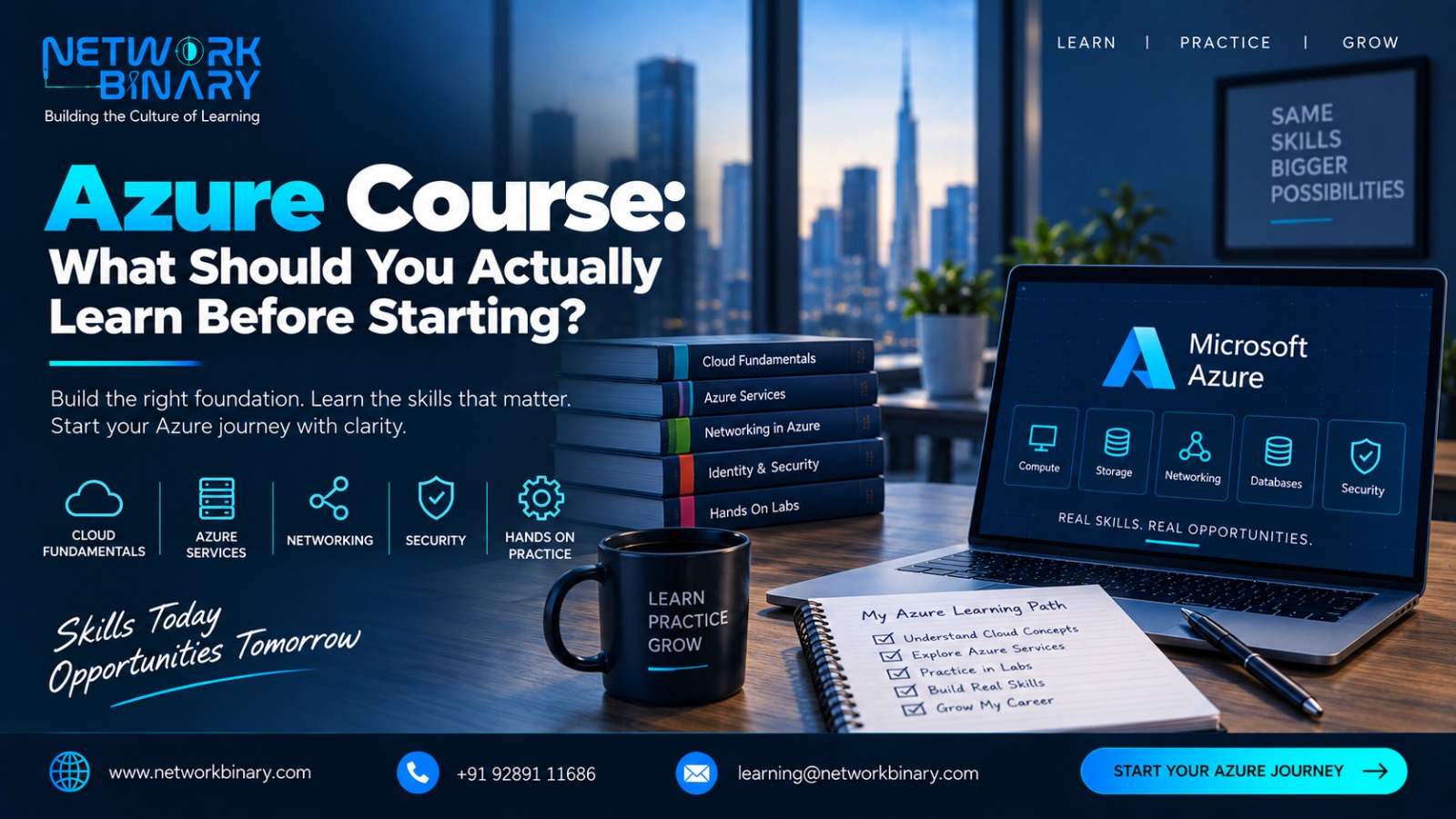
The AZ-104T00-A: Microsoft Azure Administrator course provides hands-on training for IT professionals responsible for implementing, managing, securing, and monitoring Microsoft Azure environments. The course develops practical administration skills across Azure identity, governance, storage, compute, networking, security, backup, and monitoring. Participants learn how to manage Azure subscriptions and identities, configure storage, deploy and manage virtual machines, implement virtual networking, connect Azure with on-premises environments, manage network traffic, deploy web applications and containers, and monitor Azure resources. The training also introduces Azure management tools and automation capabilities used by administrators in real-world cloud environments. Through practical exercises and administration-focused scenarios, learners build the skills needed to provision, configure, secure, optimize, and troubleshoot Azure resources. The course prepares participants for the AZ-104: Microsoft Azure Administrator examination and supports progression toward the Microsoft Certified: Azure Administrator Associate certification.
The AZ-900T00: Microsoft Azure Fundamentals course provides foundational knowledge of cloud computing and Microsoft Azure. Designed for beginners and IT professionals starting their Azure journey, the course introduces core cloud concepts, Azure architecture, essential Azure services, and the tools used to manage and govern Azure environments. Participants learn about cloud service models, Azure architecture, core compute, networking and storage services, identity and security, Azure management tools, governance, monitoring, pricing, and support. The course combines conceptual learning with demonstrations and practical exercises to help learners understand how Azure services are used in real-world cloud environments. The training is designed to build a strong foundation for the Microsoft Certified: Azure Fundamentals credential and can serve as a starting point for further Azure role-based learning, including Azure administration and other cloud-focused career paths. Microsoft identifies AZ-900 as a common starting point for professionals pursuing careers in Azure.
The Mobile Forensics Course provides practical training in investigating mobile devices and extracting, preserving, and analyzing digital evidence from smartphones and other mobile platforms. As mobile devices increasingly store critical personal, business, and investigative data, mobile forensics has become an important component of modern digital investigations. The course introduces learners to Android, iOS, and Windows mobile operating systems, mobile device architecture, mobile networks, and forensic investigation methodologies. Participants learn how to approach mobile evidence systematically while understanding the legal and forensic considerations involved in collecting and analyzing digital evidence. Through hands-on learning, participants explore mobile forensic tools and techniques, including Android Debugging Bridge (ADB), MobileEdit, BlackBag Forensics, and JTAG-based approaches. The training also covers evidence extraction and analysis techniques that can support investigations involving data leaks, financial crimes, cybercrime, and other security incidents. The Mobile Forensics Course is designed to build practical, investigation-focused skills for professionals working in digital forensics, cybersecurity, incident response, cybercrime investigation, and law enforcement.

Dear Learner

Take a step closer to grow and glow in your career.

loader-infosectrain

Connect with Us