When people hear the term cyberattack, they often think of malware, ransomware, or hackers breaking into systems. However, some of the most successful attacks today do not target technology first; they target people.
Cybercriminals understand that it is often easier to manipulate a person than it is to bypass advanced security controls. This is the foundation of social engineering, a tactic that relies on deception, trust, and human psychology rather than technical vulnerabilities. That is why Social Engineering Awareness Training has become an essential part of modern cybersecurity strategies. At Network Binary, we constantly work with organizations that recognize the growing importance of preparing employees to identify and respond to these threats before they lead to costly incidents.
What Is a Social Engineering Attack?
A social engineering attack occurs when a cybercriminal manipulates an individual into sharing sensitive information, granting access, transferring money, or performing an action that benefits the attacker.
Instead of attacking systems directly, the attacker targets human behaviour.
These attacks often appear harmless at first. An employee may receive an email that seems to come from a trusted colleague, a phone call from someone claiming to be technical support, or a message requesting urgent action from senior management.
The objective is simple; gain trust and encourage the victim to act without verifying the request.
Why Social Engineering Is So Effective
One reason social engineering attacks are successful is because they exploit normal workplace behaviour.
Employees are expected to respond quickly, collaborate with colleagues, and assist customers or vendors. Attackers use these expectations to their advantage by creating situations that appear urgent, familiar, or legitimate.
Many victims do not fall for these attacks because they lack intelligence or experience. They fall for them because the attacker has carefully crafted a believable scenario.
This is why organizations are increasingly investing in Social Engineering Awareness Training. Awareness helps employees recognize the warning signs before making a decision that could impact the business.
Common Types of Social Engineering Attacks
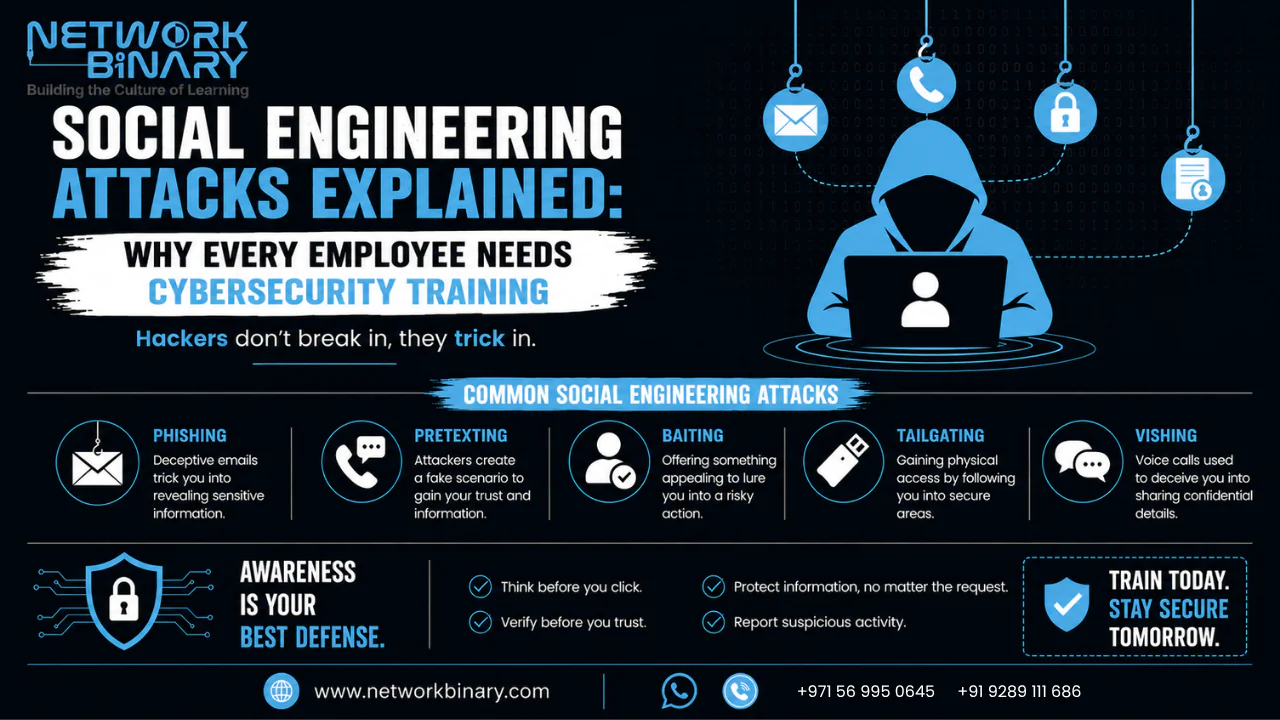
Social engineering can take many forms, but some of the most common include:
- Phishing emails designed to steal credentials
- Business Email Compromise (BEC) attacks
- Impersonation of executives or trusted contacts
- Fake technical support requests
- SMS or messaging scams
- Social media-based deception
Although the methods vary, the goal remains the same: convincing someone to trust the attacker.
How Cybersecurity Training Helps
Technology alone cannot stop every social engineering attempt because these attacks often rely on human interaction.
This is where Cybersecurity Training becomes valuable. Employees who understand how social engineering works are more likely to question unusual requests, verify information, and report suspicious activity.
Effective training helps employees:
- Identify phishing and impersonation attempts.
- Verify requests before taking action.
- Recognize common manipulation tactics.
- Protect sensitive information.
- Respond appropriately to suspicious communications.
These simple habits can significantly reduce organizational risk.
Creating a Human Firewall
Organizations often invest heavily in cybersecurity technologies, but employee awareness remains one of the strongest defences available.
A workforce that understands social engineering tactics becomes what many security professionals call a “human firewall.” Employees become more cautious, more observant, and more confident in identifying potential threats.
This added layer of protection can prevent incidents that technical controls alone might not stop.
Why Organizations Choose Network Binary
At Network binary, we believe cybersecurity awareness should be practical and relevant to real workplace situations.
Our Social Engineering Awareness Training and Cybersecurity Training programs focus on real-world attack scenarios, helping employees understand how social engineering attacks actually occur and how they can respond effectively.
Rather than overwhelming learners with technical concepts, the focus is on building awareness, confidence, and good security habits that can be applied every day.
Final Thoughts
Social engineering attacks continue to grow because they target one of the most valuable assets in any organization is its people.
While technology remains an important part of cybersecurity, employee awareness often determines whether an attack succeeds or fails. Investing in Social Engineering Awareness Training and ongoing Cybersecurity Training helps organizations reduce risk and build a stronger security culture.
At Network binary, we help organizations strengthen their human firewall by providing practical training that prepares employees to recognize, report, and prevent modern cyber threats.
📞 +971 569 950 645
🌐 www.networkbinary.com
📩 [email protected]